
Property Ads Comparison: Google vs Meta vs Portals for Real Estate in 2026
Every real estate business eventually asks the same question in a different order: should we run Google Ads, Meta Ads, list on portals, or all three? The honest answer is that each one buys a different kind of attention, at a different price, with a different shelf life, and comparing them on cost per lead alone gets the decision wrong almost every time.
This is a full property ads comparison across the three channels every Indian real estate business actually uses, covering cost, intent, speed to result, and what each one is genuinely good at. Use it to decide where your next rupee of ad spend should go.
Google Ads: high intent, high cost, fast start
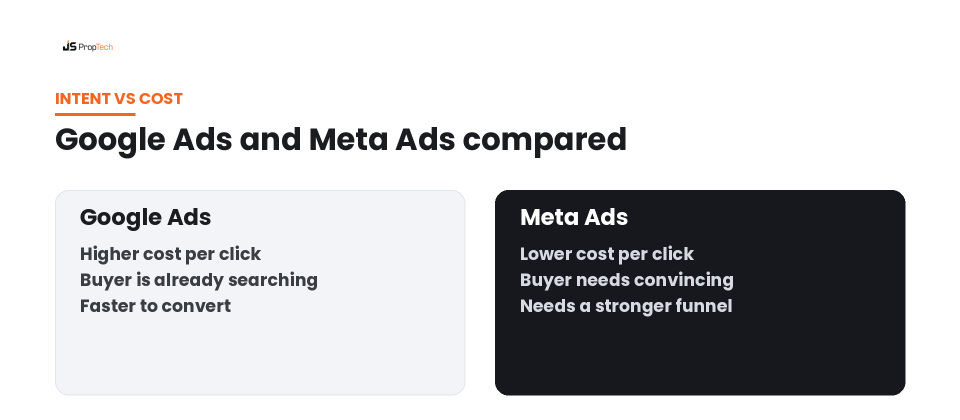
Google Ads captures people who are already searching — a specific locality, a project name, a price. That intent is the whole appeal: someone typing a specific search has usually done more homework than someone scrolling past an ad. The trade-off is cost, which rises fast in competitive micro-markets, and a requirement for tight campaign structure or budget disappears into broad match waste.
Best used for launches with budget to spend immediately, project-name searches from buyers who already know what they want, and remarketing to people who visited your site but did not convert.
Meta Ads: cheap reach, cold intent, needs a funnel
Meta Ads interrupt people who were not looking for property at that moment. That makes leads cheaper per click but colder per enquiry, since the buyer has to be convinced, not just captured. Meta Ads for real estate work best when creative does the qualifying: real photos, a stated price, a locality named in the first three seconds.
Best used for building a lookalike audience from your closed-buyer list, retargeting people who watched a video or opened a form, and reaching buyers in adjacent cities who would never search for your project by name.
Portals: built-in traffic, shared leads, brand risk
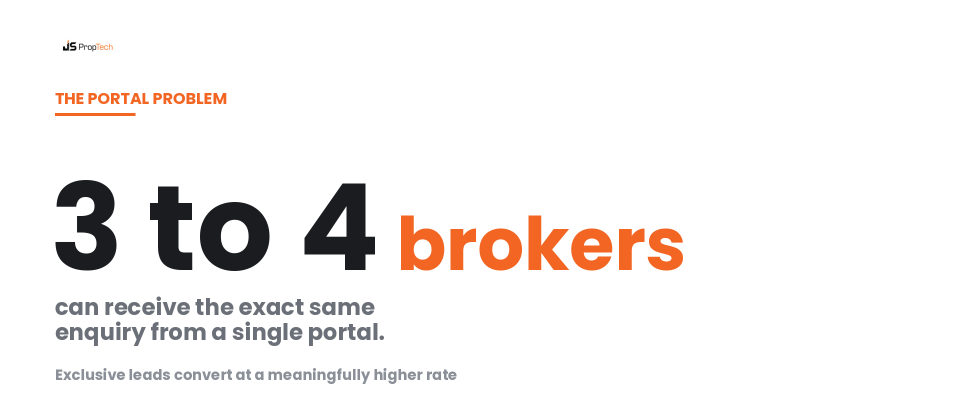
Property portals bring existing search volume without you having to build it, which is genuinely valuable for smaller builders without a marketing budget. The cost is that the same lead is often sold to three or four competing brokers simultaneously, and your listing sits next to a dozen others competing on price alone.
Best used for filling the top of the funnel cheaply, testing a new micro-market before committing ad spend, and secondary listings for inventory that is not your current priority.
Comparing the real numbers: cost, intent, and speed
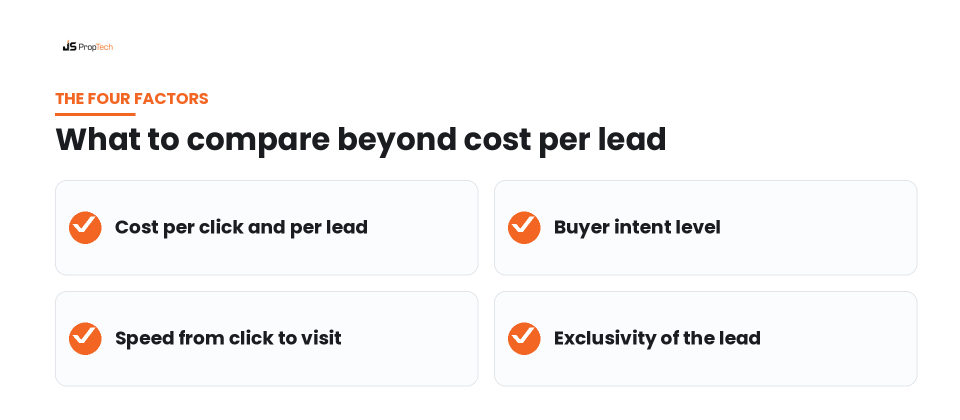
Google Ads typically costs the most per click but converts the highest share of leads into site visits, because intent is already qualified. Meta Ads cost less per lead but need more follow-up effort to convert, since the buyer is earlier in their decision. Portals sit in between on cost but lowest on exclusivity, since your lead may already be talking to a competitor by the time you call.
None of these numbers matter without the follow-up layer behind them. A fast first response and a working CRM can make a mediocre Meta lead outperform a poorly-followed-up Google lead, which is why channel comparison alone is an incomplete decision.
What a sensible mix looks like
Most real estate businesses that scale profitably run all three, weighted by stage: heavier on Google and portals during a launch when urgency and existing search volume matter most, heavier on Meta once the project is established and you are nurturing a longer consideration cycle. Track each channel by cost per conversion, not cost per lead, and revisit the split every quarter rather than locking it in once.
For a full breakdown of how to size the split as a percentage of budget, see our guide to real estate marketing budget planning. At JS PropTech we run all three channels as one connected system rather than three separate experiments, so the comparison stops being theoretical and starts showing up in your close rate.
A worked example across all three channels
Numbers make this comparison concrete in a way general advice cannot. Take a mid-sized project spending a total of one lakh rupees across all three channels in a month. On Google Ads, forty thousand rupees typically produces around ninety clicks at a competitive cost per click, converting to roughly eighteen enquiries and, at a strong conversion rate for high-intent search traffic, two to three actual deals.
The same forty-thousand-rupee equivalent on Meta Ads, spread across cold and retargeting audiences, usually produces closer to two hundred clicks at a much lower cost per click, generating perhaps thirty enquiries, but converting to only one or two deals given the colder intent of the audience. Portal spend of the remaining twenty thousand rupees might list the project prominently for the month, generating fifteen to twenty enquiries, of which most are shared with competing brokers and convert at the lowest rate of the three, often under one deal.
Laid out this way, Google Ads produced the fewest leads but the most deals, Meta Ads produced the most leads at the lowest individual cost but needed the heaviest follow-up effort, and portals delivered volume without exclusivity. None of these numbers are universal, they shift by city, project type, and price point, but running this exact exercise with your own actual campaign data, rather than trusting industry averages, is what turns a property ads comparison from theory into a real budget decision.