

Real Estate Lead Nurturing: Staying in Front of Buyers Through a Long Buying Cycle
Real estate lead nurturing is what happens, or more often fails to happen, to the majority of leads who are genuine but not ready yet. Every campaign produces them: buyers with the right budget and the right location who are still six months from deciding, waiting on a bonus, a loan approval or a family conversation.
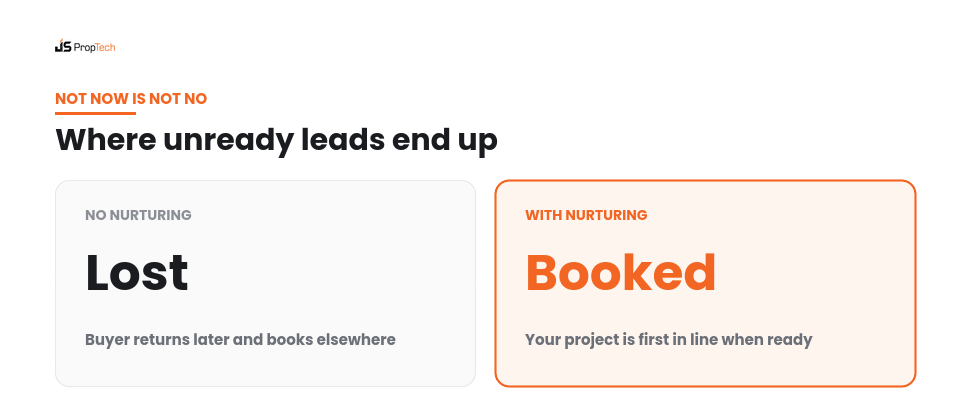
Most sales teams call these leads a few times, get a polite “not now”, and move on. Six months later the buyer is ready and books with whichever project stayed in touch. Nurturing is simply the discipline of being that project, without burning your sales team’s time or annoying the buyer.
Why most leads are not ready on day one
Buying a home is a long decision with many steps: shortlisting areas, comparing projects, arranging finance, getting family agreement and timing it around life events. A lead generated today might be at any point in that journey, and many are near the beginning.
If your only follow-up mode is “call until they book or say no”, you are optimised for the small share of buyers who are ready now. Everyone else gets pushed away by calls that are too early and too salesy. Qualification tells you who they are; nurturing tells them you are still there when they are ready. The two work together, which is why real estate lead qualification comes first.
Build segments before you build messages
Nurturing works when the message matches where the buyer is. Start with a few simple segments based on what you learned during qualification: timeline, budget band, configuration and whether it is self-use or investment. A family planning to buy in six months needs very different content from an investor comparing yields.
Keep segments manageable. Four to six well-defined groups in your CRM are far more useful than twenty that nobody maintains. Every lead should sit in exactly one nurture track at a time, with a clear rule for when it moves.
What to actually send
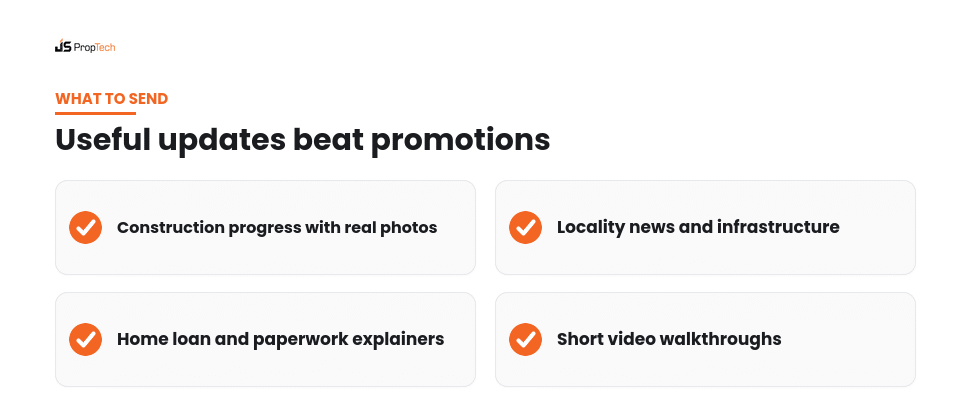
Useful beats promotional. Construction progress updates with real photos, locality developments like a new metro line or school, home loan and documentation explainers, and short video walkthroughs all give buyers a reason to open your messages. Price increase alerts and limited offers belong in the mix, but only occasionally.
Match the channel to the content. WhatsApp automation is ideal for short updates and quick replies, email suits longer explainers, and retargeting ads keep the project visible between messages. A monthly phone call from a salesperson, framed as a check-in rather than a pitch, still matters for the warmest leads.
Cadence: often enough to matter, rare enough to welcome
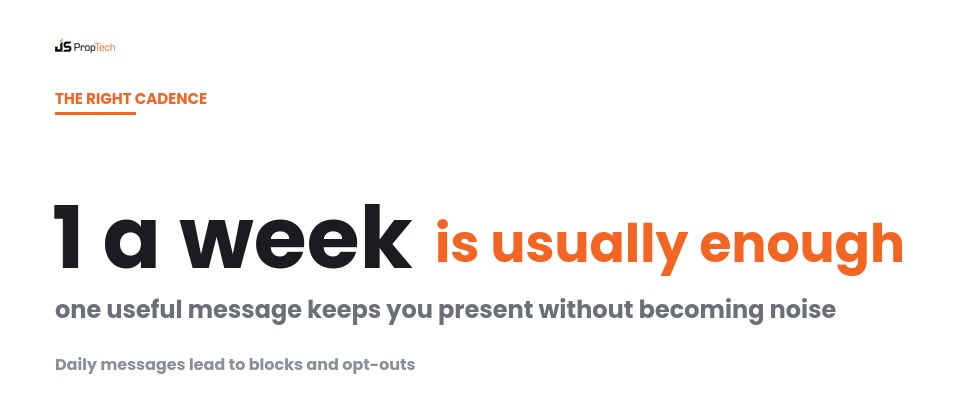
The most common nurturing mistake is sending too much. Daily messages feel like spam and lead to blocks and opt-outs, which remove the lead from every channel at once. For most segments, one useful message a week, with a lighter touch for longer timelines, keeps you present without becoming noise.
Watch engagement closely. A lead who opens every update, clicks the floor plans and asks a question is telling you their timeline has moved forward. One who has not engaged in two months may need a different approach or a simple question asking whether they are still looking.
Real estate lead nurturing for investors versus end users
Investors and end users respond to very different nurture content. An investor wants rental demand in the area, infrastructure that could lift values, payment plan flexibility and resale potential. An end-user family wants schools, commute times, safety, community amenities and a realistic picture of what daily life will feel like there.
Sending the same updates to both wastes attention. A construction milestone might be framed around possession and move-in planning for a family, and around the project moving closer to rental income for an investor. Small changes in framing make the same news feel relevant to each group.
The timing differs too. Investors often move quickly when a price revision or launch phase is announced, while families tend to move around school years, bonuses and festive periods. Building these patterns into your nurture tracks means each message arrives when that type of buyer is most likely to act on it.
Knowing when to hand back to sales
Nurturing should always be looking for the moment to hand a lead back to a person. Define clear triggers: a reply asking about price or availability, repeated visits to the pricing page, a site visit request, or a change in stated timeline. When a trigger fires, the lead should reach a salesperson within minutes, with the history attached.
This handoff is where automation earns its keep. It lets your team focus their calls on leads showing buying signals now, while the system keeps hundreds of others warm in the background. Tracking how many nurtured leads eventually book also shows the true cost per conversion of your campaigns, which is usually far better than first-month numbers suggest.
Real estate lead nurturing turns “not now” into “not yet” and keeps your project first in line when the buyer is ready. At JS PropTech we build nurture tracks inside the CRM and WhatsApp flows builders already use. How many of the leads your team marked “not interested” last year have since bought from someone else?