

Real Estate Virtual Tours: Using Video and 3D Walkthroughs to Book More Site Visits
Real estate virtual tours used to be a novelty. Today they are part of how buyers shortlist. A family comparing four projects will rarely visit all four; they watch, scroll and click through what is available online, drop the ones that disappoint, and book visits only to the two or three that still look promising.
That makes the virtual tour a gatekeeper for your site visits. A good one earns you a place on the shortlist and sends buyers to the site already sold on the basics. A poor one, or no tour at all, quietly removes you from consideration before your sales team ever gets a chance.
What a virtual tour actually does for sales
A virtual tour answers the questions that brochures cannot: how big the living room really feels, what the view from the balcony looks like, how the kitchen connects to the dining area, and whether the amenities are as generous as the render suggests. Buyers who get those answers online arrive at the site with fewer doubts and more specific questions.
That changes the quality of your site visits. Instead of spending the first half hour explaining layouts, your sales team can spend it on pricing, payment plans and the specific unit the family already likes. Visits get shorter, more focused and more likely to end in a booking conversation.
The formats worth using
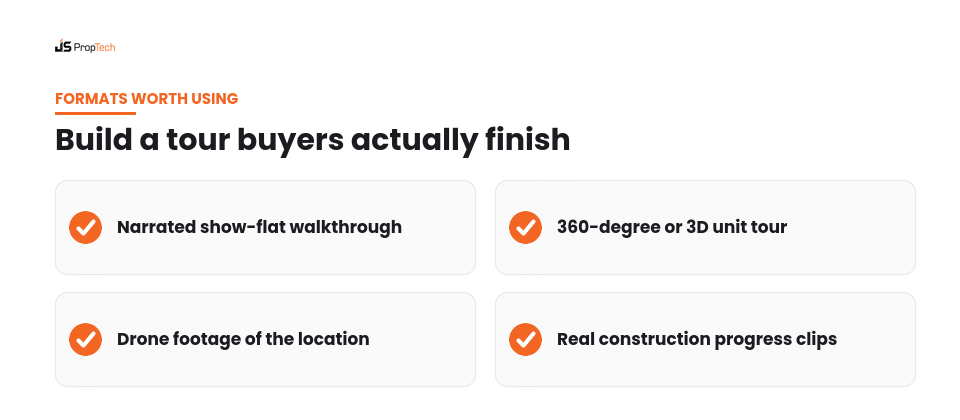
Not every project needs every format. A narrated video walkthrough of the show flat is the most versatile and the easiest to share on WhatsApp and social media. A 360-degree or 3D tour lets buyers move through a unit at their own pace and suits serious buyers who want to explore every room.
For under-construction projects, combine rendered 3D walkthroughs with real footage of the site, the approach road and construction progress. Buyers have learned to discount renders, so pairing them with honest reality builds trust. Drone footage of the location and surroundings is often the single most convincing clip you can show.
Where to put your tours
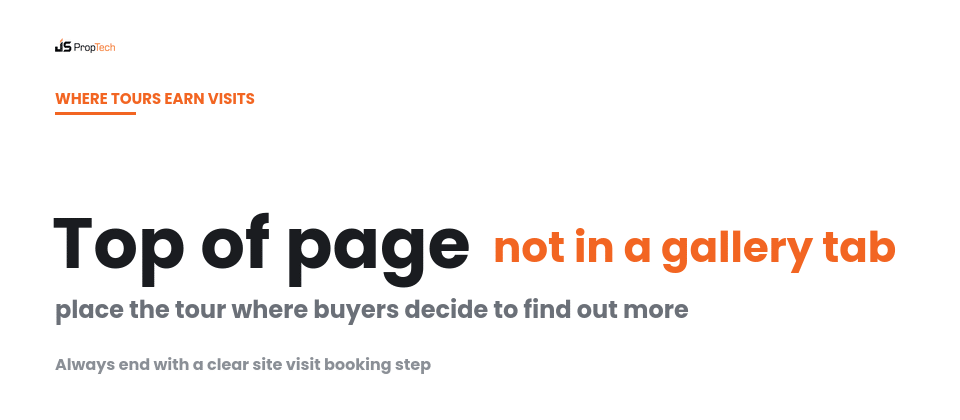
Your tour should appear wherever a buyer is deciding whether to find out more. Embed it near the top of the project landing page, not buried in a gallery tab. Use short clips from it in Instagram Reels and paid social, and keep a link ready for your sales team to send the moment a lead asks about layouts.
Your Google Business Profile, YouTube channel and channel partner kits should all carry the same tour. Partners in particular benefit, because they can share a professional walkthrough with their own clients instead of improvising with phone videos taken on a hurried visit.
Turning tour viewers into visit bookings
A tour should always end with a next step. Place a clear call to action beside or immediately after it, such as “Book a site visit this weekend” with available slots, and make the booking itself take seconds. Offer to send the brochure and price sheet on WhatsApp in the same flow.
Track who watches. Website visitors who spend time on the tour are among your warmest prospects, so build them into a retargeting audience and show them site-visit invitations over the following days. When a lead who watched the tour enquires, tell the salesperson, because that buyer is further along than a cold form fill.
Planning real estate virtual tours on a builder’s budget
A useful virtual tour does not require a film crew for every project. One well-planned shoot day at the show flat and site can produce a narrated walkthrough, short vertical clips for social media, drone footage of the location and still frames for ads. Plan the shot list in advance around the questions buyers ask most often, so every minute of footage has a purpose.
For projects without a finished show flat, invest in accurate 3D walkthroughs of the main configurations and combine them with regular real footage of the site. Update the site footage every month or two; progress videos are cheap to make and give you a steady supply of fresh, trustworthy content for ads and nurture messages.
Assign someone to own the tours after launch. Links break, floor plans change and new phases open, and an outdated tour that shows the wrong layout or an old price sheet undoes all the trust it was meant to build. A quick quarterly check keeps everything current.
Common mistakes that cost you visits
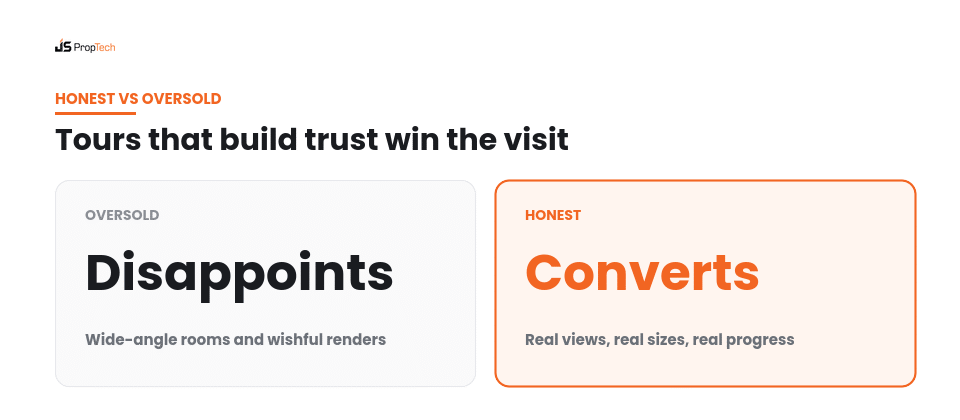
The most common mistake is a tour that looks nothing like reality. Wide-angle lenses that make a small bedroom look huge, renders with furniture that could never fit, or amenities shown years before they exist all create disappointment at the site, and a disappointed buyer rarely books.
The second is a tour that is hard to use. Slow-loading 3D files on mobile data, tours without any narration or labels, and videos with no captions lose most viewers within seconds. Test your tour on an ordinary phone on an ordinary connection before you spend a rupee promoting it.
Done honestly, real estate virtual tours do not replace site visits; they make every visit count for more. At JS PropTech we build tours into the landing pages, ads and follow-up flows so viewers turn into booked visits. If a buyer could only see one video of your project before deciding whether to visit, would it be good enough to earn that visit?