

Real Estate Lead Qualification: How to Stop Junk Leads Eating Your Sales Team’s Day
Real estate lead qualification is the part of the funnel almost everyone skips, and it shows up in the same complaint from almost every sales team: “the leads are junk”. Wrong numbers, people who filled the form by accident, students browsing for fun, brokers fishing for inventory, buyers whose budget is half the project’s entry price. Every one of them gets a call, a WhatsApp message and a follow-up, and every one of them quietly burns time that should have gone to a real buyer.
The fix is rarely “get better leads” in the abstract. It is building a series of small filters so that by the time an enquiry reaches a salesperson, it has already shown some evidence that it is worth their time. None of these filters are complicated, but together they change what a sales day looks like.
Why junk leads are usually a setup problem
Most junk is created, not received. An instant lead form that asks only for a name and a pre-filled phone number makes enquiring effortless, which is exactly why it attracts people with no intent. Broad targeting, curiosity-bait creative and “click here to know the price” hooks all push volume up and quality down at the same time.
It helps to separate two kinds of bad lead. Some are simply invalid: fake numbers, duplicates, people who never meant to submit. Others are valid but unqualified: a real person, genuinely interested, who does not fit the project on budget, location or timeline. The first kind is a form and platform problem; the second is a targeting and messaging problem. Treating them the same way is why many teams never fix either.
Put friction in the right places
The single most effective change is adding a little friction to the form. On Meta Ads, switch instant forms to the “higher intent” type, which adds a review screen before submission. Add one or two short questions that a serious buyer answers in seconds but a casual browser will not bother with, such as preferred configuration and budget band.
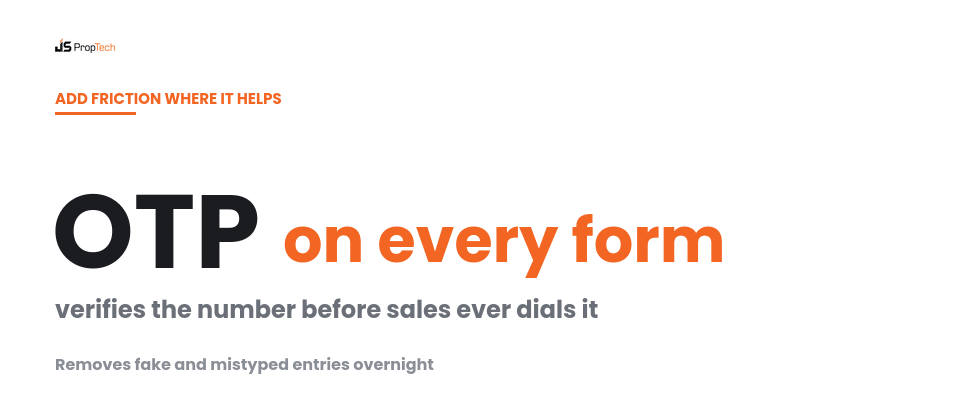
On your own landing pages, OTP verification of the mobile number removes most fake and mistyped entries overnight. It costs you a small drop in raw form fills, and that drop is almost entirely people your team would never have converted anyway.
Let the ad do half the qualifying
Your creative is a filter too. An ad that states the starting price, the location and the possession timeline up front will get fewer clicks than one that hides them, but the people who click already know the basics and have decided they are still interested. That is qualification happening before you pay for the lead.
The same logic applies to targeting. On Google Ads, bid on searches that include the project name, locality or configuration rather than generic phrases like “flats for sale”. On Meta, exclude audiences that are clearly outside the buying profile rather than relying on the algorithm to figure it out.
The first call is a qualification call, not a sales pitch
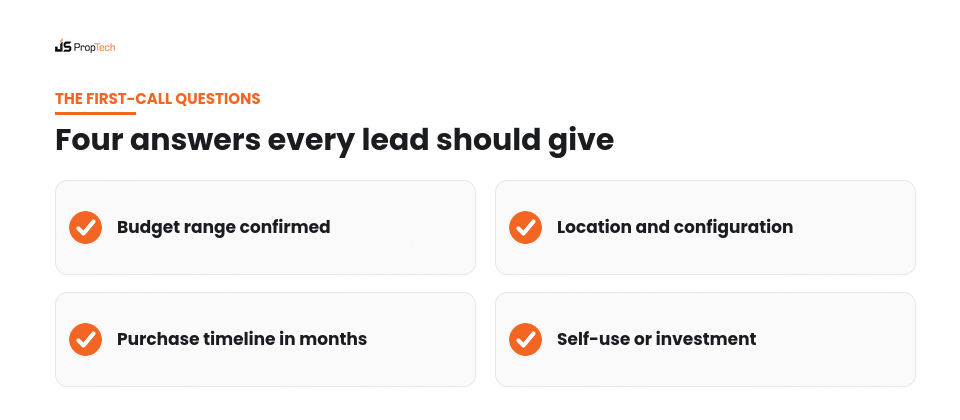
When a lead does arrive, the first conversation should be short and structured. Confirm the person enquired, then establish four things: budget range, preferred location and configuration, purchase timeline, and whether it is for self-use or investment. This is not about interrogating the buyer; framed well, these questions sound like helpful service.
Speed still matters here. A lead called within minutes of enquiring remembers the project and is far more willing to answer honestly, which is why speed to lead and qualification go together. Wait a day and even a genuine buyer may not recall filling the form, which makes them look like junk when they are not.
Score and route, do not just call
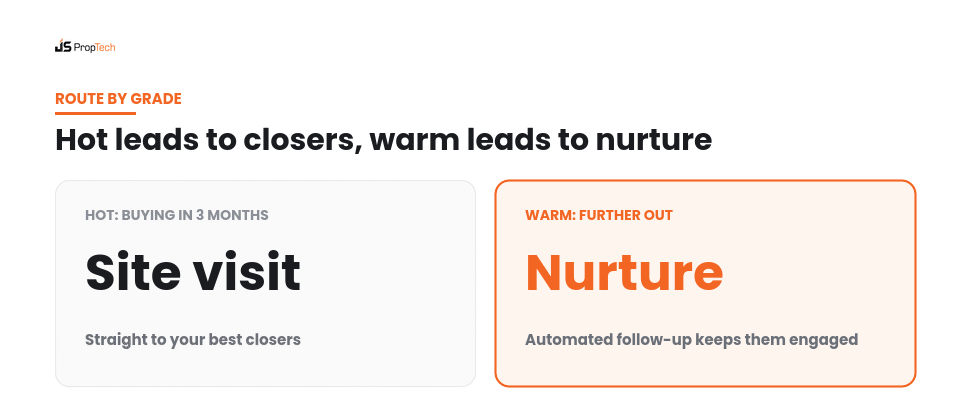
Once you have those answers, give every lead a simple grade. A hot lead fits on budget and location and plans to buy within three months; a warm lead fits but is further out; a cold lead does not fit the current project at all. Log the grade in your CRM so it drives what happens next rather than living in one salesperson’s memory.
Routing is where the time savings actually appear. Hot leads go straight to your best closers for a site visit. Warm leads enter an automated nurture sequence so they stay engaged without eating a salesperson’s day. Cold leads are tagged for other inventory or future launches rather than being chased repeatedly for a project they cannot buy.
Making real estate lead qualification a team habit
Filters only work if the whole team uses them the same way. Write a short first-call script that covers the four qualifying questions, agree what counts as hot, warm and cold, and make the grade a required field before a lead can be moved to any next stage. Consistency matters more than perfection; a simple system everyone follows beats a sophisticated one that only your best salesperson uses.
Review a sample of graded leads together every week. Listen to a few calls, compare the grades different people gave, and adjust the definitions when they drift. Within a month or two, the team develops a shared instinct for what a genuine buyer sounds like, and marketing gets far more reliable feedback on which campaigns are worth scaling.
Feed the results back into the ads
Qualification data is the most valuable input your ad campaigns can get. If you know which leads became site visits and bookings, you can tell Meta and Google which enquiries were good, so the platforms optimise for buyers rather than for form fills. Even a simple weekly upload of qualified leads makes a noticeable difference over a few weeks.
Review lead quality by campaign, ad set and creative, not just by overall volume. You will usually find that a small number of campaigns produce most of the junk, and cutting or fixing them improves your cost per conversion far more than any bid change.
The goal of real estate lead qualification is not fewer leads for the sake of it. It is making sure your sales team spends its hours on people who can actually buy. At JS PropTech we build these filters into the forms, ads and CRM workflows so the enquiries that reach sales are the ones worth calling. If you graded last month’s leads honestly, what share would your team call genuine buyers?